Learning from More Than One Expert: The Power of Expert Input at The John Taylor SCITT

Picture of Mike Simmons, SCITT Director

Mike Simmons, SCITT Director

Looking for more information?

We place a high value on expert input. But what do we actually mean by that?

It certainly doesn’t mean standing at the front of a room and telling trainees everything they need to know. Nor does it mean that our trainees should simply learn from the expertise that exists within the SCITT team.

In fact, we believe the opposite.

Great teacher training should expose trainees to a range of experts, perspectives and sources of evidence.

That means learning from experienced teachers and school leaders, specialist practitioners, researchers, subject experts and colleagues with particular expertise in areas such as SEND, behaviour, assessment, curriculum and inclusion.

And, of course, we love our SCITT Director, Mike Simmons. But it certainly shouldn’t mean only learning from Mike!

Not even Mike has all the answers.

And that is actually rather important.

Teaching is an extraordinarily complex profession. No one person can be an expert in every aspect of teaching and learning, across every phase, subject and context. A geography teacher brings particular disciplinary expertise. A SEND specialist brings a different perspective. A school leader may provide insight into implementation and organisational culture. A researcher can help us understand what the wider evidence tells us, while an experienced classroom practitioner can demonstrate what a particular approach looks and feels like in practice.

Each brings something different.

For our trainees, that matters because we want them to develop something much more important than a collection of teaching techniques. We want them to develop the ability to think like a professional: to encounter ideas, examine the evidence, consider context, question assumptions and make informed decisions about their own practice.

Expertise, Evidence and Professional Judgement

Our commitment to expert input is therefore closely connected to our commitment to evidence-informed teacher education.

Research gives us access to a body of knowledge that is far wider than that which any individual practitioner can possess. It allows our trainees to explore important questions about how pupils learn, effective teaching, supporting pupils with SEND, cognitive load, behaviour, assessment and implementation.

But research alone isn’t enough.

Evidence needs to be understood, interpreted and considered alongside the realities of classrooms, pupils and schools. An idea that looks compelling in a research paper still needs to be understood by a teacher who is thinking about the 30 pupils sitting in front of them on a Monday morning.

That is why research, specialist expertise and classroom experience need to sit alongside one another.

This is also why we deliberately seek out different voices for our training programme.

One of the questions we increasingly ask ourselves at The John Taylor SCITT is:

Who is the best person to help our trainees understand this?

Sometimes the answer will be someone from within our own team. Sometimes it will be an experienced teacher or school leader from one of our partner schools. Sometimes it will be a specialist practitioner who has developed deep expertise in a particular area. And sometimes the best person to answer the question will be someone who has spent years researching it.

The principle is simple:

We don’t want to be the experts in everything. We want our trainees to have access to the people who are experts in the things that matter.

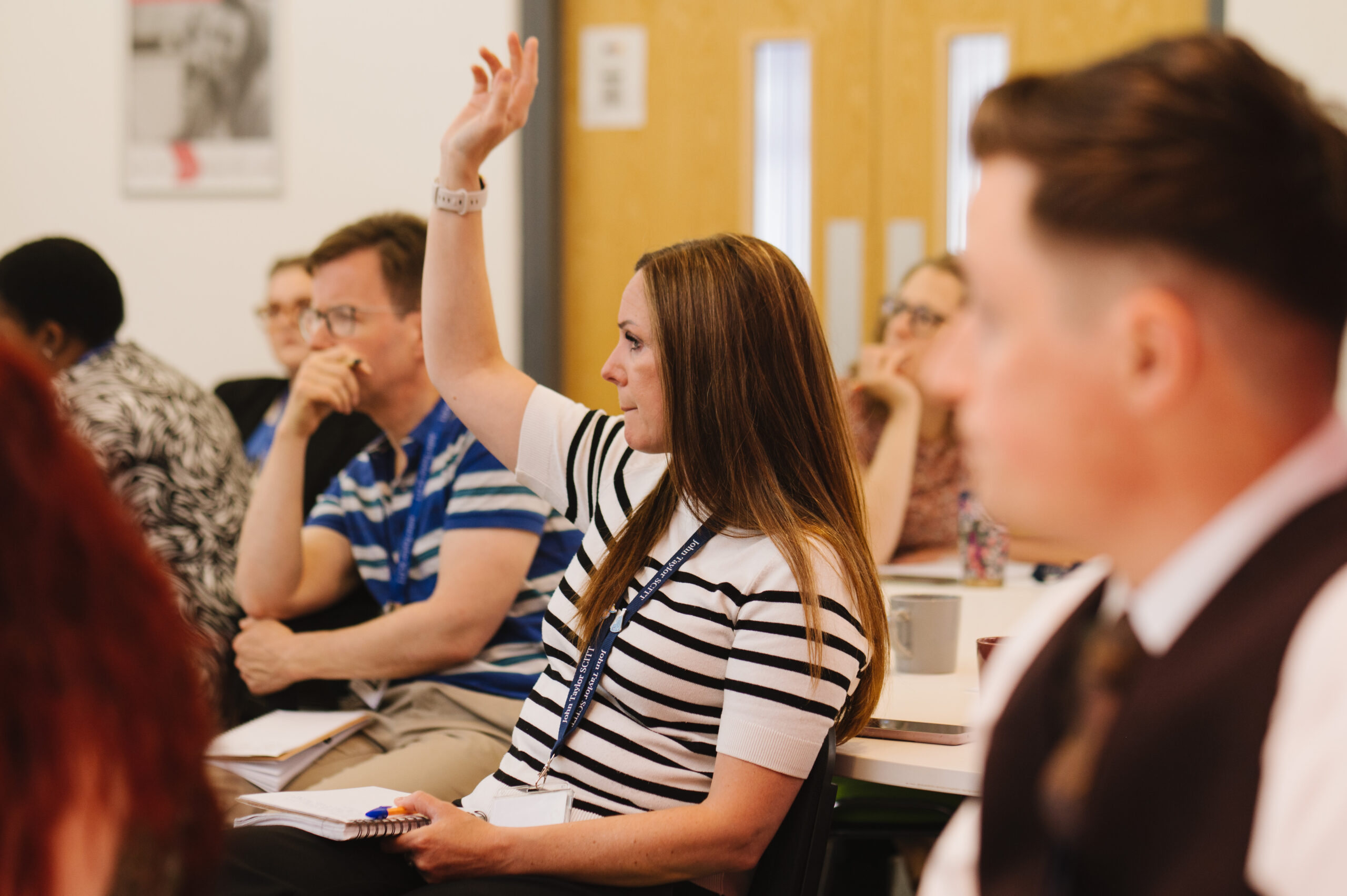
JTSCITT trainee teachers during a session

From Expert Input to Classroom Practice

There is another important distinction here.

We aren’t interested in expert input simply because having an expert speak to trainees sounds impressive. The purpose of expert input is ultimately classroom practice.

At JT SCITT, our Professional Studies programme is designed to connect expert input with opportunities to observe, practise, rehearse, discuss and reflect.

A trainee might encounter a piece of research on a Friday morning. They might then see an expert model a particular approach, discuss how it could be adapted for different learners, rehearse elements of it with colleagues and subsequently try it in their own classroom.

That creates a much more powerful learning journey than simply listening to a presentation.

Expert → evidence → modelling → rehearsal → classroom application → reflection.

The expert input is the starting point, not the destination.

And sometimes the most valuable learning comes from what happens after the expert has finished speaking.

What questions does the trainee have? What assumptions have been challenged? What might this look like in their subject? How might it need to be adapted for a pupil with SEND? What would they expect to see if the approach was working?

These are the conversations that turn expert input into professional learning.

We don’t want trainees simply to ask, “What does Mike think?”

There is another benefit to exposing trainees to a range of experts: it creates better professional conversations.

Experts will sometimes disagree. They may qualify an idea, approach a problem from different perspectives or interpret evidence differently. Research rarely provides a neat answer to every question, and what works in one context may need to be adapted in another.

We don’t see that complexity as a problem. We see it as an essential part of becoming a professional.

We don’t want our trainees to finish their training year thinking:

“What does Mike say I should do?”

We want them increasingly to ask:

“What does the evidence suggest?”

“What are the arguments?”

“What does this look like in practice?”

“What might this mean for my pupils and my context?”

“How will I know whether it is working?”

That is a much more sophisticated form of professional learning.

It also prepares trainees for a career in which nobody will hand them a complete answer every time they encounter a new challenge. The professional responsibility of a teacher is not simply to follow instructions; it is to develop the knowledge, judgement and habits that enable them to make good decisions.

Our Role Is To Curate Expertise

This doesn’t mean that the SCITT team becomes less important.

Quite the opposite.

Our role becomes even more important because we are responsible for curating the learning experience.

We need to identify high-quality evidence and credible expertise. We need to select the right people for the right questions. We need to help trainees connect theory with classroom practice. We need to challenge misconceptions, provide context and create opportunities for application.

In other words, we are not trying to be the sole source of knowledge.

We are trying to build a learning environment in which our trainees can access, interrogate and apply the best available knowledge.

That is a very different proposition.

It also means that our own learning has to continue. If we expect trainees to engage with expertise beyond their immediate environment, we need to model that behaviour ourselves. We need to remain curious, seek out new evidence, listen to specialists and be prepared to change our thinking when the evidence or professional learning tells us that we should.

Learning Beyond Our Own Walls

Our partnership model makes this possible.

The John Taylor SCITT is fortunate to work with a wide range of schools and professionals, alongside colleagues from the wider education sector and academic and research communities. This gives our trainees opportunities to encounter different classrooms, different contexts and different professional perspectives.

We want them to leave their training year having experienced a professional community that is much bigger than their individual placement school.

Because teaching is not a profession in which we ever truly stop learning.

The strongest teachers continue to seek out new ideas. They read. They question. They listen to colleagues. They engage with research. They observe others. They refine their practice.

Our teacher training should model that same professional habit from day one.

Perhaps this is the most important reason for bringing a range of experts into our training rooms. We aren’t simply trying to give trainees the answers they need for their first year of teaching.

We are trying to establish a habit of professional curiosity.

We want them to become teachers who know where to look when they don’t know something. Teachers who can distinguish evidence from opinion. Teachers who are prepared to listen to someone with greater expertise. Teachers who can ask good questions. Teachers who can evaluate an idea rather than simply accept or reject it. And teachers who understand that developing expertise is a career-long process.

Looking for more information?

In Conclusion

Ultimately, expert input isn’t about creating a hierarchy in which one person has all the answers and everyone else listens.

It is about creating opportunities for trainees to encounter knowledgeable people, credible evidence and different perspectives — and then helping them make sense of those things as developing professionals.

So, at The John Taylor SCITT, we will continue to bring expertise into our training rooms and perhaps most importantly:

How can we help our trainees become the kind of teachers who continue to seek out expertise long after their SCITT year has finished?

Because ultimately, our goal isn’t to create teachers who know everything.

It is to create teachers who know how to keep learning.

Other Latest News...

JTSCITT trainees sat in hub for a lesson
School Blog

Struggling to Choose your ITT Provider?

Choosing the right ITT provider is an important step in your teaching journey. In this blog, we explore what to look for in a training provider and explain how John Taylor SCITT’s school-centred approach, expert-led curriculum and personalised support help trainees build successful, rewarding teaching careers.
Read this Article →
JTSCITT teacher trainees during a session at the hub
School Blog

My Journey into Teaching: Ten Years in the Making

After ten years of balancing work, family life, university and a global pandemic,Gemma reflects on her journey into teaching. From volunteering in a primary school to completing her teacher training, this blog shows that there is no single route into the profession – and that with determination and the right support, it’s never too late to achieve your goal.

Read this Article →
A trainee teacher sat with students at a desk.
School Blog

Living Close to School or Commuting? Finding the Right Balance as a Teacher

Is it better for teachers to live close to school or have a daily commute? While living nearby offers convenience and flexibility, a short commute can provide valuable time to decompress and maintain healthy work-life boundaries. This article explores the advantages and challenges of both approaches, helping trainee and early career teachers find the balance that best supports their wellbeing and professional success.

Read this Article →