How We Assess Trainee Teachers at The John Taylor SCITT

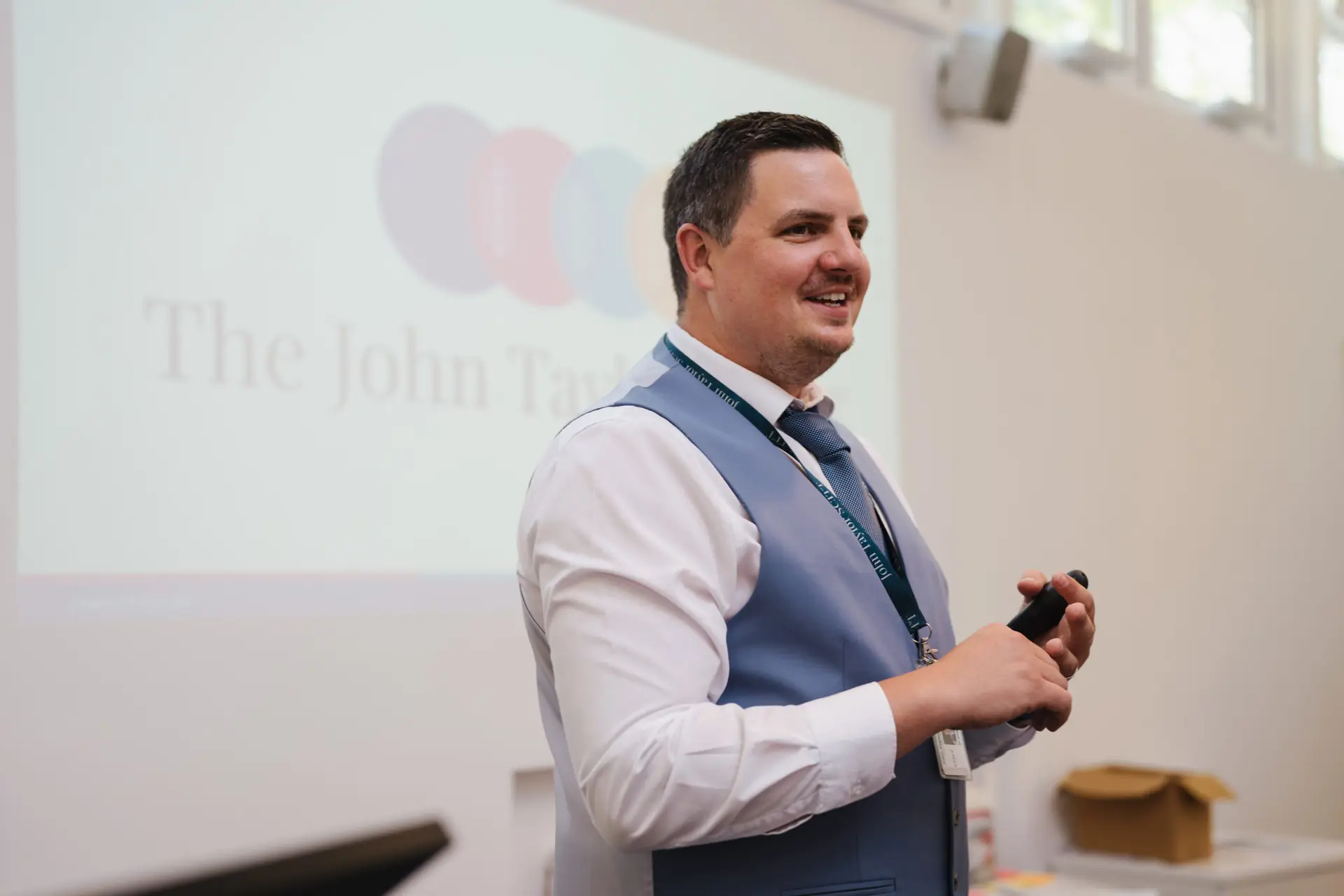
Picture of Mike Simmons, Director

Mike Simmons, Director

One of the questions I’m asked most often by those interested in teacher training is simple: “How do you decide when a trainee is ready to become a teacher?”

It’s an important question because recommending someone for Qualified Teacher Status (QTS) is a significant professional judgement. It carries real responsibility, not just for us as a provider, but for the pupils our trainees go on to teach.

At The John Taylor SCITT, our approach is both rigorous and supportive. We are absolutely clear: no trainee is recommended for QTS until they have fully met all of the Teachers’ Standards at the end of the course. But how we get to that point matters just as much as the final decision.

Looking for more information?

A Journey, Not A Single Judgement

Assessment on our programme isn’t about a single lesson or a one-off observation. It’s about understanding how a trainee develops over time.

We structure the year in three phases, each designed to build confidence, competence and independence. Trainees begin by developing core teaching habits in their home school, move to a contrasting placement to broaden their experience, and then return to consolidate their practice at a level similar to an Early Career Teacher.

Across this journey, we gradually increase teaching responsibility coupled with expert support.

Regular Feedback That Actually Helps

At the heart of our assessment model is frequent, meaningful feedback. Trainees are observed every week, both formally and informally, and this feeds directly into focused development targets.

Mentor meetings are a key part of this. They’re not just check-ins. They are structured, professional conversations where trainees reflect on their practice, review evidence, and agree clear next steps. This ensures that feedback is not only given, but acted upon.

We align all feedback to our assessment framework, so trainees always understand how their day-to-day practice connects to the final goal of meeting the Teachers’ Standards.

JTSCITT trainees during a hub session

Balancing Formative and Summative Assessment

We use a blend of formative and summative assessment to build a complete picture of each trainee.

Formative assessment happens continuously through lesson observations, planning feedback, and reflective practice. It’s where most of the learning happens.

At key points in the programme, we step back and take a broader view. End-of-phase reviews and transition assessments allow us to evaluate how well trainees are progressing and whether they are ready for the next stage. These points are carefully moderated to ensure consistency and fairness.

A Strong Focus on Evidence

Everything we do is grounded in evidence. Trainees build a clear record of their development over time from lesson evaluations and mentor feedback to pupil progress and reflective writing.

By the end of the programme, this is drawn together into an “Award of QTS” profile, which shows the evidence base for how each of the Teachers’ Standards has been met. It’s not a tick-box exercise; it’s a coherent narrative of professional growth.

External Challenge and Quality Assurance

We take quality assurance seriously. Final recommendations for QTS are not made in isolation.

Each trainee’s evidence is reviewed by an Assessment Board that includes external colleagues. Their role is to challenge, validate and ensure that our judgements are robust, fair and consistent. This external perspective is crucial in maintaining high standards.

More Than Just Meeting The Standards

While the Teachers’ Standards provide the benchmark, we are equally interested in the kind of teacher each trainee is becoming.

We look at professionalism, commitment, responsiveness to feedback, and the ability to think carefully about teaching and learning. Through activities like reflective discussions and trainee-led presentations, we also assess how well trainees can articulate their thinking which is an important part of being an effective practitioner.

Looking for more information?

In Conclusion

Ultimately, our assessment approach is about balance. We hold high expectations, because the profession demands it. But we also provide the structure, feedback and support that trainees need to meet those expectations.

By the time a trainee completes the programme, there should be no surprises. They know they are ready and we have the evidence to stand behind that judgement.

That’s how we assess trainees at John Taylor SCITT: carefully, transparently, and always with a focus on developing great teachers.

Interested in starting your teaching journey? Learn more below. 

Other Latest News...

JTSCITT training session taking place at the training hub.
School Blog

Everyone Welcome. Every Journey Valued.

This blog explores John Taylor SCITT’s commitment to inclusion through its Inclusive Pathway, designed to support trainee teachers from all backgrounds. It outlines how tailored support, barrier-free access and strong partnerships help ensure every trainee feels valued, belongs, and is equipped to succeed in achieving QTS and beyond.

Read this Article →
School Blog

The Final Stretch: Making the Most of Your Last Placement

As your training year draws to a close, your final placement is a valuable opportunity to consolidate your skills and step confidently into the classroom. In this blog, JTSCITT staff share practical advice on staying motivated, seeking feedback, and making the most of your last term as you prepare for your teaching career.

Read this Article →